To speak to our team
For us at Corinthian Stone Ltd it is a privilege and a pleasure to repair, restore and conserve heritage buildings constructed of Bath stone throughout Somerset – especially in the city of Bath itself – and across Wiltshire.
Having worked with this very special soft, porous limestone for decades, we have an intimate understanding of what makes it vulnerable, what makes it deteriorate and what it takes to restore it.
Bath stone ages very gracefully, but it does weather and needs regular care and maintenance.
It is susceptible to things like:
If you suspect your stone structure is taking strain, contact us to arrange a careful assessment to identify the cause and extent of decay, and we’ll recommend a sympathetic intervention.
Contact our team
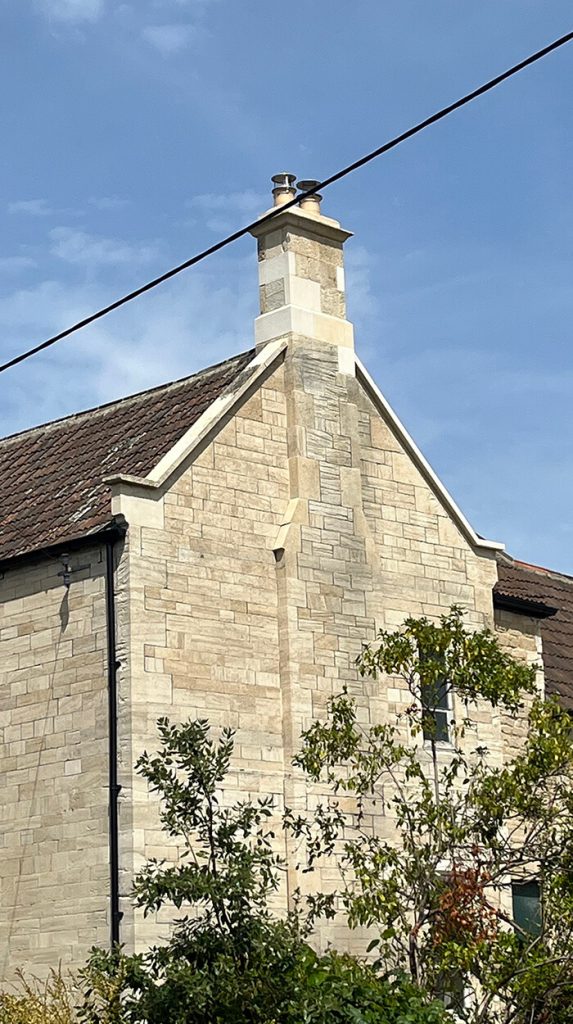

Every old building tells a story, and every repair undertaken in stone restoration must respect that narrative. We begin with careful assessment, identifying the extent and causes of decay before determining the work required and the stone repair techniques we should employ.
For surfaces showing early signs of deterioration, plastic repair using lime-based mortars matched precisely to the existing Bath stone can consolidate and protect vulnerable areas whilst preserving the original fabric.
Where damage is more advanced but the main body of stone remains sound, we employ indent repairs—cutting out decayed sections and piecing in new Bath stone, carefully selected to match the original in colour, texture, and geological bed.
Replacement carving becomes necessary when decorative elements such as finials, capitals, mullions, or corbels have deteriorated or become eroded beyond repair.
Cracked lintels, failed arches, and settling masonry require sympathetic structural repairs. We dismantle and rebuild affected sections, repointing with appropriate lime mortars and introducing discreet stainless steel reinforcement only where absolutely necessary. Historic ironwork is assessed and either conserved or replaced with non-ferrous alternatives to prevent future rust-jacking.
Contact our team
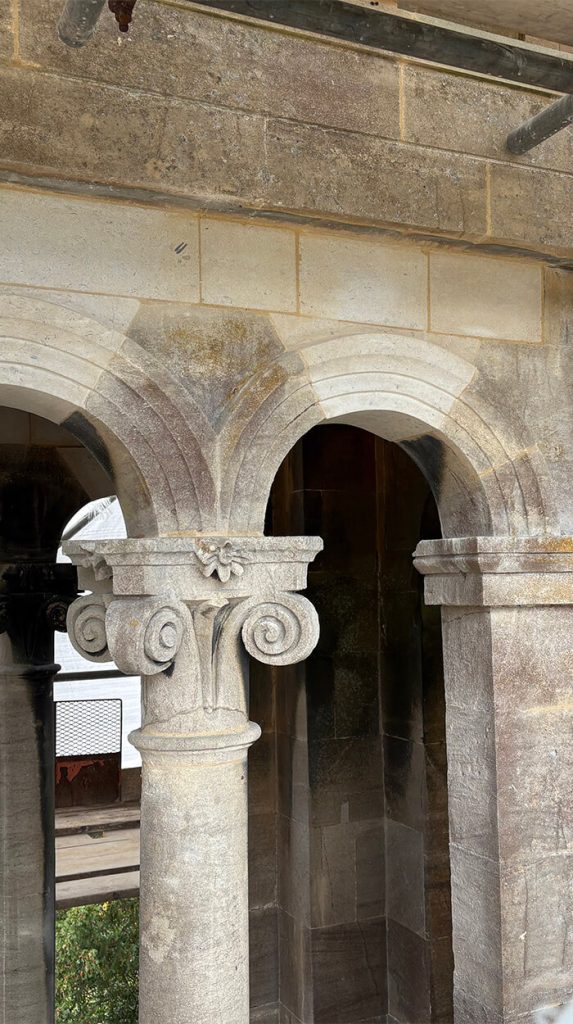
Bath stone buildings are more than historical curiosities – they're part of our regional identity. Whether your property is a listed manor house, a village church, a Georgian townhouse, or a Victorian estate building, our stonemasons bring the skills, knowledge, and respect these structures deserve.
Authenticity is key to our restoration work, which covers all manner of things such as the following tasks we have successfully completed:
Delicate Bath stone mullions and tracery that had lost definition through two centuries of weathering. We carved replacement sections where stone had delaminated completely, and consolidated surfaces showing early decay, restoring both structural integrity and architectural detail.
Corner stones fractured by historic iron cramps rusting and expanding within the masonry. We carefully removed damaged quoins, extracted corroded ironwork, and replaced with new Bath stone dressed to match the original tooling, bedded in lime mortar with stainless steel reinforcement.
Projecting bands that had suffered severe frost damage, with faces spalling away in sheets. A combination of indent repairs for localised damage and complete stone replacement where deterioration was too advanced restored the building's horizontal emphasis and weather protection.
An 18th-century pediment with acanthus leaf decoration so eroded as to be barely legible. Working from the surviving fragments and comparable examples, we carved replacement details in matching Bath stone, recreating the original craftsman's vision.
Contact us to discuss your heritage building’s needs. We’re happy to visit, assess, and advise on the most sympathetic approach to repair and conservation.
james@corinthianmasonry.com
We over 20+ years experience, our skilled stonemasonry team can help